
The most fun you can have with your (waterproof) clothes on
I have appointed myself local parish lengthsman (lengthswoman)

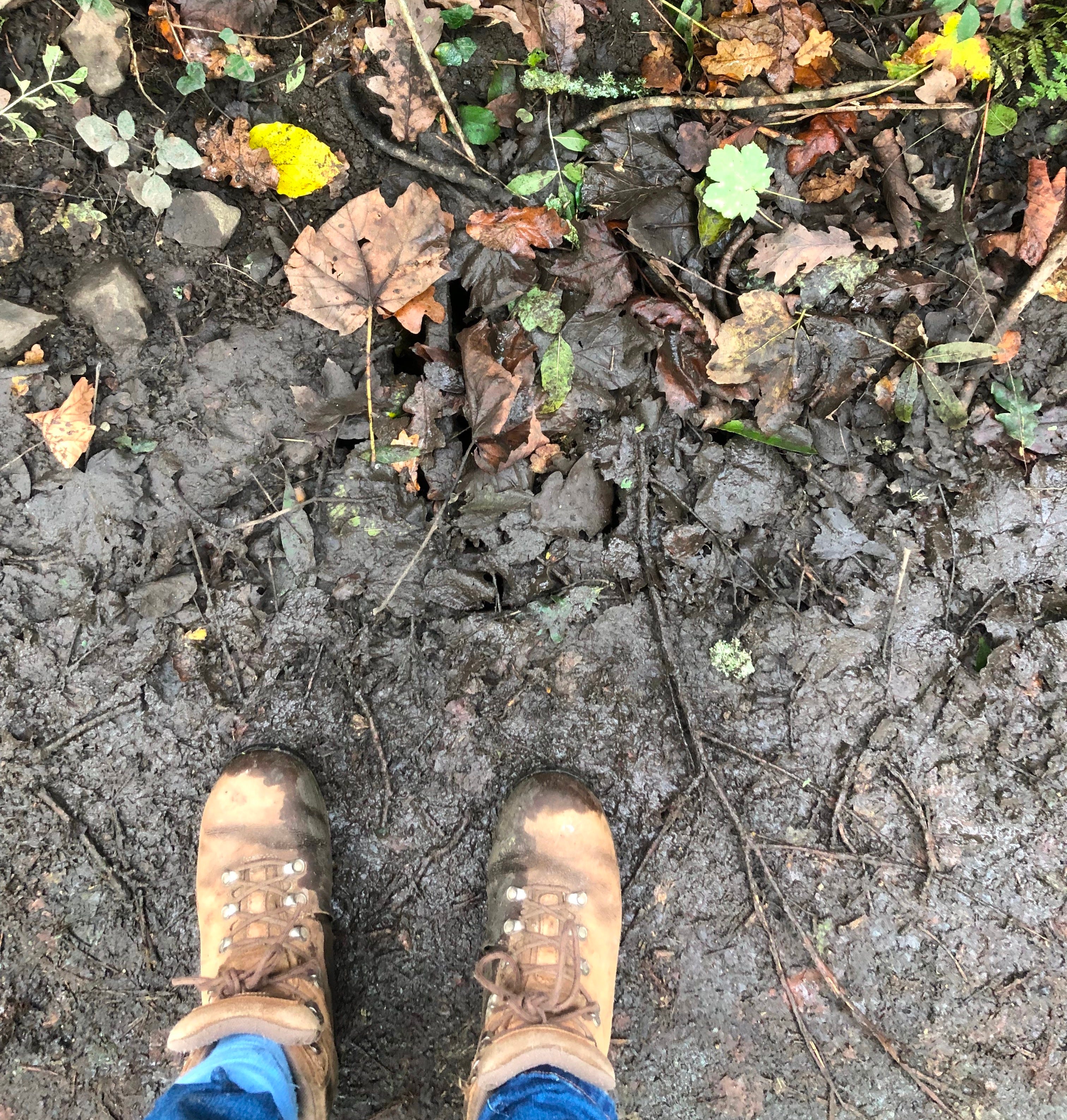
When I lived in London I never spent one measly second considering a ditch or a drain. I never wondered when the deluge came where all the dirty water went that washed over the concrete and into the gutters. As long as I didn’t get my feet wet, I didn’t care if it thundered into great cascades that gathered pace and swept entire villages away further downstream.
Why would I? Every cracked clay pipe and silted up drain and fat berg was someone else’s problem - my responsibilities lay simply within the short distance from my flat to the mains.
I didn’t know about run-off or climate change or sewage spilling into our rivers. I had no real knowledge of rain. Of course it was annoying if you got splashed on the way to the Underground, and carrying a brolly was even more of a pain, shaking it off outside shops, trying not to let its soggy folded canopy fall against your leg on the bus.
But I never experienced a flood. I never witnessed the terrifying power of too much water with nowhere to go. The road sweeps kept the streets clean, sending the soggy cigarette butts and the dog shit gurgling down into the Victorian drains of London, and I guess if I had been bothered to think about it, I would have (rightly) concluded that it all ended up in the grey, swirling, stinking Thames, because I grew up on a diet of Charles Dickens. But I just didn’t care back then.
The only thing I knew NOT to flush away was fairground fish, which at that time could be won as prizes, sad flashes of orange bobbing around in plastic bags (was that a UK-only thing, or did it happen worldwide?). But that was more to do with worrying about cruelty than worrying about drains.
All that has changed now that I live in the countryside. I have become an EXPERT in ditches. I could probably go on Mastermind with everything that I have learnt on rain-lashed nights, standing in my pyjamas, shovel in hand, face splattered with mud as I brace myself across another ditch, digging the silt and the leaves and the acorns and the beech nuts - and yes, the plastic bottles and McDonald’s wrappers - out of the channel that is meant to carry water past our house.
I have learnt while poking unbelievably long drainage rods up sewage pipes, and I have learnt while trying to reattach a broken gutter while balancing on a ladder as the water streams in torrents down my sleeves.
Because if I don’t do this, there is no one else who will. And if the drains get blocked in the countryside, it can lead to all sorts of issues, and when the rainwater or sewage breaches the ditches, its next stop might be your home.
Once upon a time there were people checking the ditches and drains for you. The parish lengthsman traipsed the lanes and byways, clearing leaves and snow, and performing all the jobs that Highways are meant to do now, but of course don’t have the funds or the wherewithal any longer - or at least not in the long-forgotten lanes hidden away in my part of the Blackdown Hills.
The parish lengthsman stored so much useful knowledge. He (yes, I’m certain he would have been a ‘he’ back then) would have known where all the grates to all the drains were, which are now covered by years of silt and stones. He would have known where all the pipes were, and which ditches they should have run to, and where the water would then have travelled, into which part of the field or river, and whether it should have gone below or above the road.
Well now there is no parish lengthsman traipsing our lanes. Very occasionally we might see a couple of men (yes, I’m afraid they do tend still to be men, but I’m now thinking there might be an opening in the market for me….) munching a sandwich in a layby - and once, hilariously, one of them got stuck in a ditch that has got so bad that it has eaten away half of our lane and is a hazard to horses, bicycles, pedestrians, and - as they discovered - council vehicles too (it still hasn’t been fixed).
So I have appointed myself parish lengthsman for my little bit of lane. I go out there when rain is forecast, and also when it’s actually raining, and then again when it’s been raining for a while. Whenever I go on a dog walk after rain (and let’s face it, that’s pretty much every day from now on until next April) I check every drain cover on my patch. I find the flow of water fascinating. I can watch it for hours. I divert torrents with mud so that they change course back into their intended ditch. I scrape leaves and silt from hidden drains with my hands. I yank stones out of their grills. I prod deeply flooded pools with sticks and in my wellies while the dogs sigh and look dejected.
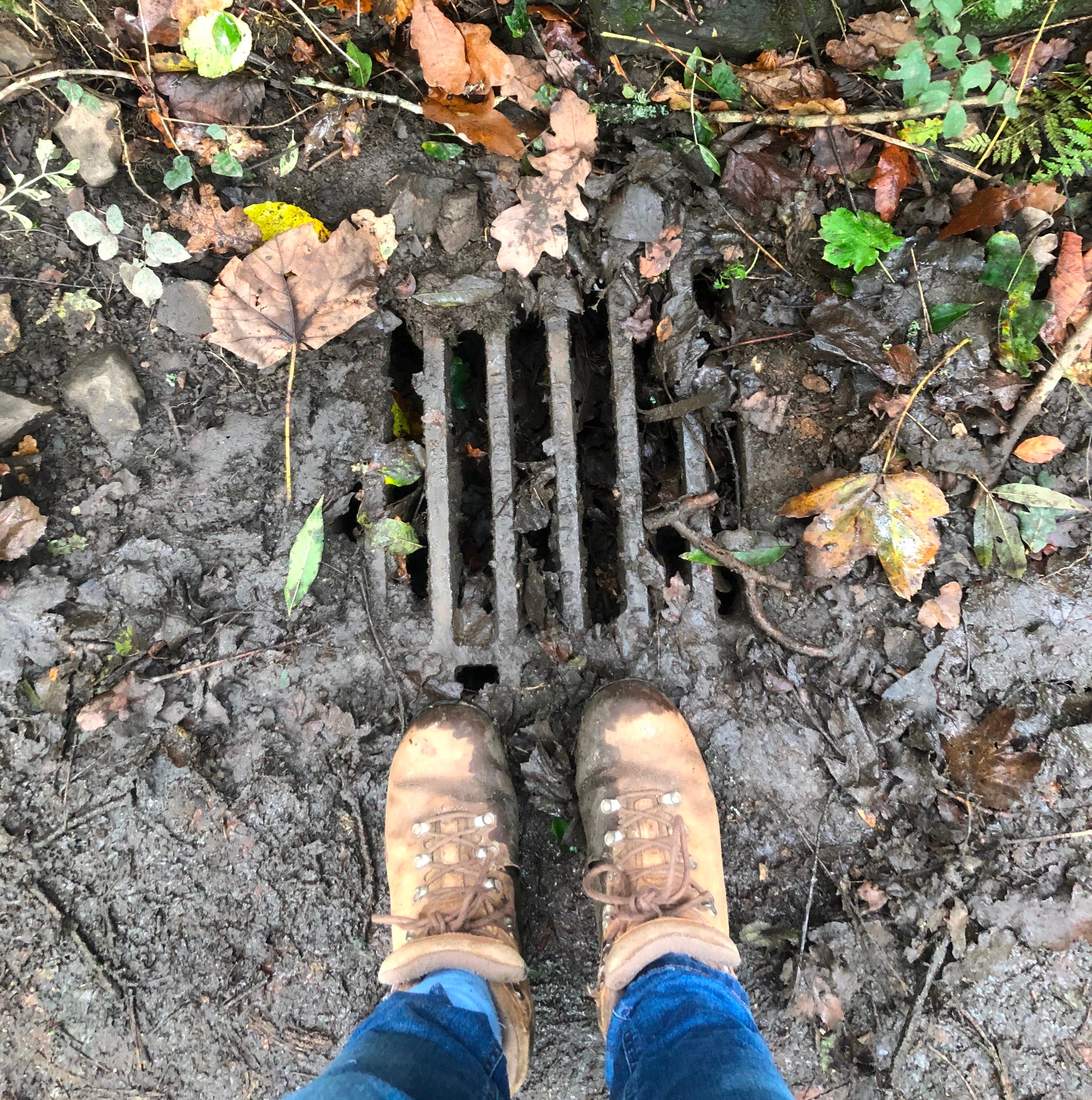
There is nothing more satisfying to me than jabbing at a blocked drain with a stick and hearing that sucking sound, and seeing the little whirlpool start so perfectly tiny and then grow larger and larger until all of a sudden it whooshes down the pipe and the entire foamy mucky backed-up blockage finally disappears and stops flooding the lane. I live for that little flutter of satisfaction that warms my (cold and damp) heart.
And I don’t stop at roadside drains and ditches. One of the biggest excitements of my year was unblocking a clogged up sewage drain outside our holiday let. Sewage and septic tanks don’t faze me. My twentysomething self spared no thought for such things, but now I’m fiftysomething and I can’t get enough of it. My set of dyno-rods were the best bloody present anyone ever gave me (actually, I think I gave them to myself).
Yep, I am an expert in sewers, drains, ditches, pipes, gutters, channels, trenches, ditches, gullies, watercourses. It cannot be coincidence that there are so many words for it in the English language: once upon a time, people knew that these things were important. Nowadays, it is only us hicks out in the sticks who care. And this is just another thing that I love about the countryside.
Because I’ve recently discovered that there are others like me out here - of course there are. I was talking to one of my farming neighbours who often helps me with various things. Our two farms run alongside each side of the river, which we both, I am pleased to say, care about deeply. My fields are the Somerset side; his are the Devon side. He mentioned that he had been clearing ditches on his side of the valley, but also putting in leaky dams and building scrapes, which is a way of slowing water, which I have also been doing on my side, and which I’m sure I will write about one of these days. It was a meeting of minds!
We had a long and wonderful conversation about our ditches and about nature-based solutions and the balance between channelling water off the road but slowing it down before it gets to a river. Frankly, this was a lot more interesting than any conversation I ever had when I was twentysomething, as it involved a bit of history, a bit of community, a bit of engineering, and a bit of swearing - and of course a lot of mutual understanding. I am looking forward to re-opening the conversation next time it rains. Which will probably be this afternoon.
It's so lovely to find others who see the value of a cleared drain! We have to do that a few times each year for our ditches to save our roads, here in the country, deep in the Pacific Northwest.
Oh my I loved every single word of this Vanessa! Well done for being your lanes self appointed lengthswoman. The cleared drain looks very satisfying!
We are VERY lucky here, we have one dedicated council worker on the island & one of his jobs is to look after the ditches.
We have ditches that run alongside the fields busy the road & then at intermittent places, another ‘ditch’ from the road to the main ditch. The little ditches need to be dug up usually every year from what I’ve seen. The ditches that run along the fields are deep enough to take the water & were well positioned with sea all around & not much concrete.